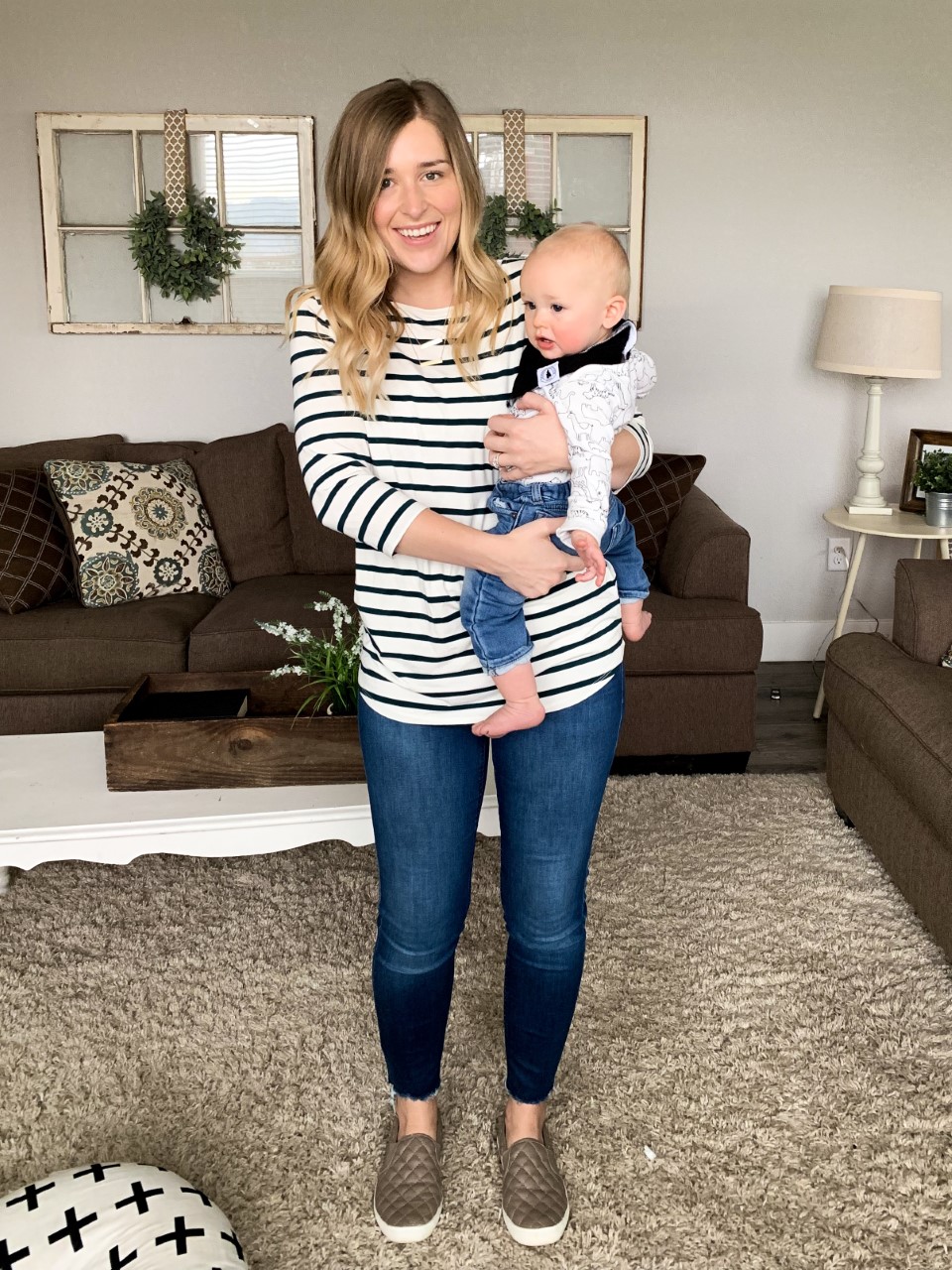
Hey, everyone! Thanks for hopping on over here. It’s been awhile. I just can’t seem to fit in writing time in the midst of my busy day, but thankful for Spring Break giving me a bit of extra time in my day while my kids nap! I posted an Instagram Poll on my stories earlier this week, and so many of you voted or DM’d me asking for our everyday routines and discipline strategies we use with our kids. So here we are!
Let’s talk routines. This one is for the parents out there trying to make it to the end of each day without pulling all your hair out! I’ve found that, with all my kids, a routine is key. Period. There’s a few reasons why I think routines are magic: my kids know what to expect throughout the day, it helps me keep my type 1 sanity in check, and it helps the flow of our day go much smoother!
I first learned about the importance of routines back when I taught preschool for a couple of years. I take a lot of what I learn about education and what’s best for kids in the classroom, and it totally applies at home too. You can often hear me saying, “Being a teacher helps me be a better Mom, and being a Mom helps me be a better teacher!” Most of the time, these ideas and concepts go hand in hand. Routines is one of those! Now, I know some days it’s good to break loose from your everyday routine. But when I say routines, I mean the Monday through Friday hustle. Balancing mornings, school, work, and the few hours after school leading up to bedtime. When we are off in our routine, we feel it!
Before I get to our routines, I need to talk about planning. Now, I know I’m a Type 1, and planning is my game. It comes naturally to me. I realize that maybe not everyone is wired this way. Not everyone has things planned out in lists upon lists. But, either way, planning ahead when you can helps create shortcuts. Most of the time, planning ahead for me looks like meal planning for the week and grocery shopping on Sunday. Everything is thought out so I don’t have to make decisions on dinner after a long day at work. It’s already decided on and I already have what I need for those healthy family dinners that are so important to us. Planning ahead also looks like prepping lunches and outfits for the week on Sunday. Outfits and lunches for the kids, but also for myself. Planning ahead also looks like intentionally plugging in “me time” during the week and running it by Andrew so we are both on the same page. This mostly means planning in workout time. I actually just text him at work, “Hey! When you get home from work, I’d like to go for a run if that works for everyone.” I learned the importance of planning ahead as much as I can this last summer when we went from two kids to three and I was on my own during the day and then on my own in the morning when we all went back to school. Planning ahead saves my sanity!
Here’s what a typical weekday in our house looks like:
Morning Routine:
- Prep: Lay out clothes, fill backpacks with homework, and pack lunches the night before. The two older kids know where to get their outfit and can mostly get themselves dressed on their own. They also know where their backpacks and lunches are downstairs so they are responsible for grabbing them on their way out.
- Get myself completely ready before waking kids. I can’t be trying to wrangle three kids and myself at the same time. I learned my lesson on that one, realllllll quickly! So, I get ready before the kids get up so I can focus on helping them get ready.
- Wake kids up in the same order every morning: Logan first, Hunter second, and then Everett last. It sounds silly, but if one of them wakes up early on their own, it throws our whole routine off!
- Let them gradually wake up: usually crawling into my big bed to watch some cartoons for about 10 minutes or so.
- Kids get ready: get dressed, brush teeth, and hair. Logan is way more independent on this one. AMEN! She only needs help taming her wild curls. I can focus more on helping Hunter during this time. I let him do what he can, and then help him with the rest.
- Breakfast: something simple but nutritious at the same time.
- While Logan and Hunter are eating breakfast at the table, I wake Everett and make him a bottle to drink in the living room while I get him dressed on the floor.
- Load the car: coats on, kids grab lunches and backpacks, and we head out the door to get seat belts on.
- Off we go! My kids get to pick the songs we listen to on our morning commute to help them get pumped for the day. We sing loud and dance in our seats. I love it! Also, as we get closer to school we stop the music and say our daily affirmations: “Today is going to be a great day! I am going to do my best! I will be a good friend! I will ask for help when I need it! I am a leader!” and so on…They repeat after me and it sets our day off on the right foot and with a good mindset.
School/Work: most of the day it’s the same. I drop off the kids in the morning and Andrew picks up in the afternoon. The kids are at school, and I teach middle school…enough said there.
*Side note: This used to be our morning routine, but my sister is now watching the boys all day at our home and takes Logan to and from school! Can I get an AMEN! But this was our routine the last three years or so since Hunter was born.
Evening Routine:
- Get home and Logan starts homework.
- Hunter plays with Andrew and Everett in the living room.
- Mom starts dinner. (4/5 nights one or both kids come in to help)
- While dinner is being made, most of this time is play time after Logan gets her homework done.
- Dinner: always around the table with the tv off and phones away. We talk about our days and let everyone share. This is my favorite time, even though it’s stressful and we are working on Hunter staying seated the whole time and eating all his dinner and Logan trying new foods…the struggle is worth it. It’s our chance to regroup and bond at the end of the day.
- Clean Up: Andrew is on clean up and dishes duty and it’s my turn to play with the kids in the living room.
- *Insert any practice or games here…just depends on the time of year.
- Bath time: most nights the kids get in the bath. Andrew and I take turns on who does bath time. Logan has graduated to taking showers. So, she’ll take a shower in our bathroom while the boys are in the bath.
- Bedtime Routine: this one is the most important! I can proudly say that our kids are in bed by 7:30pm every night and most of the time already sleeping by that time. AND they sleep through the night…all three! We lay Everett down first, but before we lay him down we walk him around and every takes their turn giving him a kiss, hug, and saying goodnight. He goes down in his crib without a sound machine, and just his binkie. Lights off, shut the door, and he’s sleeping within five minutes most nights. Logan and Hunter give kisses and hugs and we all say goodnight to each other before going into our bedrooms. I go into Logan’s room and we read for a bit in bed and Andrew reads to Hunter in his bedroom. The older kids have their own sound machines and night light. We leave their doors cracked and we both say goodnight and they are sleeping in 5-10 minutes after that. All by 7:30pm.
When I tell people this, or it comes up in conversation, people seem to be amazed. Like, that’s not the norm in most homes? I didn’t realize it until the more and more I talked with other parents or colleagues. How did we get to this point, you may be wondering? We start them early. We sleep train them as babies and never look back. We keep the same bedtime routine every single night, even on the weekends. Their bedtime may be a little later on the weekends but the routine is the same. There’s no push back or complaining. They know this is the way it is. They crawl into bed themselves and put themselves to sleep on their own. At first it’s really hard. A few sleepless nights, but they are learning and we stay strong. With Hunter, when we transitioned him to his toddler bed, he would occasionally get out of bed and come down the hall to our bedroom. We calmly but firmly said “Back to bed. Let’s go.” We’d tuck him back in and this happened a few times before he finally figured out that what we say we mean. Now, I will say…this was harder for Andrew to follow than myself. I had already been doing this with Logan before we met. He wanted to sit with Hunter or hold him. Or go into Everett’s room when he started crying those first nights of sleep training. Nope. We had to be on the same page, or else the kids know which parent to go to for sympathy. After Andrew saw how easy it was for Hunter to fall asleep on his own following this routine and it was working with Logan for so long, he saw how important it was and it was much easier for him to follow and sleep train with Everett.
So that’s our normal every day routine and sleep habits. Let’s talk discipline routines…
This is where most parents have their own philosophy. And it’s also a touchy subject for most. No one wants to talk about spanking, timouts, grounding, consequences, etc. We’ve tried everything over the years: spanking, behavior charts with stickers, taking something away for a short period of time, removing screen time as a consequence, a XXX sheet that we stuck on the fridge, being sent to their room, and so on. So, I’m just going to share what we have found that works for us in hopes that some of you find it to be helpful! We’ve stuck with this simple routine for the last four years…
Rule #1, we start them young. Rule #2, consistency. Rule #3, have a purpose behind it. You’ll notice this is a trend in our home. We start young with everything so that way they only know that way. It’s the norm. For discipline, it’s pretty simple. What we say, we follow through on. I can’t say that they’ll go to timeout and then not actually put them in timeout. Like, hello! Empty threats don’t work. Everything I say and do must be followed through and applied consistently. We have a few family rules that we try and help them learn and grow into:
- Respect: how we talk to and treat others.
- Family Matters: we help each other and around the house because this is all of our home. We do everything together.
- Obeying: we follow what we are asked to do.
That’s really it. Those are the areas where discipline stems from in our house, when our kids fall short of following one of those rules. When the kids talk in a tone that isn’t kind, talking back, hitting, taking a toy away, not helping when asked, being asked twice or more to do something, etc. These are the teachable moments where we have to step in and help them learn. If we ignore it, give empty threats, or continue to let the actions happen…we are telling them that behavior or choice is okay. That’s our “why” behind disciplining. It’s our job as parents to help them learn from an early age what is right and wrong. What choices are better than others. We are their role models, and we shouldn’t rely on them learning this from anyone else, but us. We start addressing these behaviors and choices at an early age.
Our discipline routine is really simple:
- It starts with us asking them to do something or stop doing something.
- If they don’t follow through or stop what we are asking, then we ask/tell them again one more time. We also at this time let them know what the consequence will be if they choose to continue or not. “Please put your cars away, or you will sit in timeout.” This gives them to opportunity to make the right choice on their own before we implement a consequence.
- If we ask them twice and it continues, then we discipline. And the discipline changes for what is effective for each child. Each kid is different. Some kids respond better to spanking. Some respond to having something taken away. Some kids who are older respond more to be grounded. In the beginning when they are little, we try to find out what works best for that child. Luckily, both Hunter and Logan react to the same consequence: time outs. They are movers, so sitting in one spot for an allotted time really works for them. They don’t like it, so it’s gotten to the point where if we even say the word timeout, then they make a good choice on their own.
- Time Out: if needed. I always sit them in the same chair. Unless we are out somewhere and then I just pick a place. They sit in timeout for the number of minutes that match their age. For example, when Logan was three years old, her time out time was three minutes long. As they get older, their time is longer or shorter if they are younger. We always sit them down in the chair and start the timer where it’s visible for them to see. Then, we walk away and give them their space but where we can also still keep an eye on them to make sure they stay in timeout.
- After Time Out: The timer goes off! We then have a conversation, and I sit at their level, where I first thank them for sitting and doing their timeout. I then hold their hands and talk with them about why they went to timeout. I try and have them use their own words to talk about what happened instead of me just telling them. This is where the learning happens. In those conversations outside the situation. And I would always end with “Let’s try and make a better choice next time.” Give a high five and then off they go.
- Repeat if necessary.
That’s really it. It seems to work for us. It’s hard at first. Usually the first few time outs, they get off their chair and try to walk away. But we continue to say “Back to timeout.” And place them back in their chair and start the timer over again until they finally sit through their full time on their chair. This is also a good time to share that both Andrew and I have to use the same language. We both take turns initiating the timeout so it isn’t just always one of us. We have to be consistent. They can scream, cry, or express how they feel while they are in timeout. I know some parents’ views on this may vary, but for us emotions are okay. Emotions are healthy. I try and name their emotion when talking with them “I know you’re mad. I can see your upset, but we still need to sit through our timeout and then we’ll talk.”
And speaking of emotions, I’ve learned that trying to talk or reason with my kids while they are experiencing “big emotions” is never good for anyone involved. I have found that when they are having these big emotions, sometimes I don’t even say anything. I just get down on their level and give them a silent hug. I want them to know that I am there for them, no matter what. If they are still upset or choosing to throw “a fit” I always say, “It’s okay to feel “_______”, but I don’t think we’re ready to talk. I’ll come back when you’re ready.” And then I walk away. I let them have their space. I let them feel their emotions. Me reacting or matching their emotions does nothing. I also try and voice how I’m feeling too throughout the day, this helps them see that I have the same emotions as they do. “Momma’s just having a hard day. I’m kind of frustrated right now.” And even better, something that I try my best to do is apologize to them. This is hard. But, to admit and apologize for something I said or did that wasn’t my best choice is so important for them to hear and see. I ask them to apologize when they need to, so they need to see me do it too! I’m not perfect. We are all learning and growing together as a family.
Over time, as we are consistent in our discipline, we notice how often we put them in timeout decreases. They learn and grow from it. Logan is now seven and we often can talk about things rather than have her sit in timeout. She has learned to make good choices, even if she needs a reminder first. As for Hunter, his timeouts are finally far and few between. We rarely have to sit him in timeout. And there was a few weeks where he was sitting in timeout multiple times a day. But, he eventually learned and also can make a good choice with a reminder from us.
Hunter tested us. We were full on butting heads with him for most of his second year. I felt like giving up. I cried sometimes at night talking with Andrew about how hopeless I felt. I felt like we failed and he was going to be “naughty” forever. I hate to admit it, but it’s true. He was so different from Logan. They are both strong-willed, but he was on a whole other level. But, we stuck with it and we saw him grow and respond much easier than before. Year two challenged our parenting. We became more united and connected as parents, but also with Hunter, through that time. God gave us this super strong-willed boy for many reasons, but I truly believe we were supposed to learn from him. He helped us as we were struggling as parents with disciplining him. Now Everett, we haven’t gotten there yet. We have a little break before we start up with him. Thankfully!
I would also like to share that praise and acknowledgement is just as important as disciplining. Just like we take those teachable moments when our kids are making a poor choice, we also need to take the moments we see them making a good choice on their own and praise the heck out of them! Tell them as soon as you see it. “Hunter, thank you for sharing your cars with Everett! That’s so kind!” or “Logan, thank you for starting your homework right away! I didn’t even have to ask you. Good job!” Little moments can turn into big moments of pride for them. They need to hear and see that you notice them for all the good they are doing also. It’s a balancing act, but I can’t share enough how much positive praise impacts their behavior and attitude. They feel good when we praise them. It reinforces the good choices we hope they make on their own.
So that’s our daily routines and discipline. Whew! Those are big areas to explain and cover! Sometimes I feel like I just ramble on and on…so I hope you found this somewhat helpful, or at the least bit intriguing. I have found that when we are following our routines and stick with our discipline when needed, our family finds our groove. Days are much more enjoyable! We enjoy each other more and the time we have together in our busy every day to day. Thanks for always taking the time to read my jumbled thoughts on here, and I’d love to share how we do other things in our family! Let me know what else you’d like to hear about and even better, I’d love to hear what works for your family!
Love,
Lindsay
 The Good Life